Thursday, June 27, 2013

Creative People Say No

The following piece, from medium.com, written by Kevin Ashton is relevant to me as I work on creative projects. Time management is the hardest thing for me, right now, as I do my creative work. I have lot's of good ideas and work I want to do. Being a mom, working part-time out of the house and all the projects on the homestead take up most the time.

I struggle with saying no or yes to social commitments, community events, volunteering for this, that or the other thing. What is a creative person to do with big dreams and a few projects she'd like to accomplish on her plate?

I can just say....


Creative People Say No


A Hungarian psychology professor once wrote to famous creators asking them to be interviewed for a book he was writing. One of the most interesting things about his project was how many people said “no.”

Management writer Peter Drucker: “One of the secrets of productivity (in which I believe whereas I do not believe in creativity) is to have a VERY BIG waste paper basket to take care of ALL invitations such as yours — productivity in my experience consists of NOT doing anything that helps the work of other people but to spend all one’s time on the work the Good Lord has fitted one to do, and to do well.”

Secretary to novelist Saul Bellow: “Mr Bellow informed me that he remains creative in the second half of life, at least in part, because he does not allow himself to be a part of other people’s ‘studies.’”

Photographer Richard Avedon: “Sorry — too little time left.”

Secretary to composer George Ligeti: “He is creative and, because of this, totally overworked. Therefore, the very reason you wish to study his creative process is also the reason why he (unfortunately) does not have time to help you in this study. He would also like to add that he cannot answer your letter personally because he is trying desperately to finish a Violin Concerto which will be premiered in the Fall.”

The professor contacted 275 creative people. A third of them said “no.” Their reason was lack of time. A third said nothing. We can assume their reason for not even saying “no” was also lack of time and possibly lack of a secretary.

Time is the raw material of creation. Wipe away the magic and myth of creating and all that remains is work: the work of becoming expert through study and practice, the work of finding solutions to problems and problems with those solutions, the work of trial and error, the work of thinking and perfecting, the work of creating. Creating consumes. It is all day, every day. It knows neither weekends nor vacations. It is not when we feel like it. It is habit, compulsion, obsession, vocation. The common thread that links creators is how they spend their time. No matter what you read, no matter what they claim, nearly all creators spend nearly all their time on the work of creation. There are few overnight successes and many up-all-night successes.

Saying “no” has more creative power than ideas, insights and talent combined. No guards time, the thread from which we weave our creations. The math of time is simple: you have less than you think and need more than you know. We are not taught to say “no.” We are taught not to say “no.” “No” is rude. “No” is a rebuff, a rebuttal, a minor act of verbal violence. “No” is for drugs and strangers with candy.

Creators do not ask how much time something takes but how much creation it costs. This interview, this letter, this trip to the movies, this dinner with friends, this party, this last day of summer. How much less will I create unless I say “no?” A sketch? A stanza? A paragraph? An experiment? Twenty lines of code? The answer is always the same: “yes” makes less. We do not have enough time as it is. There are groceries to buy, gas tanks to fill, families to love and day jobs to do.

People who create know this. They know the world is all strangers with candy. They know how to say “no” and they know how to suffer the consequences. Charles Dickens, rejecting an invitation from a friend:

“‘It is only half an hour’ — ‘It is only an afternoon’ — ‘It is only an evening,’ people say to me over and over again; but they don’t know that it is impossible to command one’s self sometimes to any stipulated and set disposal of five minutes — or that the mere consciousness of an engagement will sometime worry a whole day … Who ever is devoted to an art must be content to deliver himself wholly up to it, and to find his recompense in it. I am grieved if you suspect me of not wanting to see you, but I can’t help it; I must go in my way whether or no.”

“No” makes us aloof, boring, impolite, unfriendly, selfish, anti-social, uncaring, lonely and an arsenal of other insults. But “no” is the button that keeps us on.

Tuesday, June 18, 2013

Kupala Night, Midsummer, Solstice

Light lasts far into the evening and deepens the green of the grass and ferns at the wood's edge to a rich emerald. There lies a cool darkness as I look into the dark woods. Trills of birdsong echo off the trees as creatures settle down for the night. Lightning bugs take flight, dancing upwards from the wildflowers: daisy, clover, buttercups. The pinks and purples of geranium, dianthus, columbine, rose, sage and iris bloom electric in the twilight. Deep pinks and emeralds play together as exquisite opposites.

Midsummer night is here. In Slavic countries Kupala night is celebrated.


Here is a photo and a video of what happens in Poznan, Poland on Kupala night. Thousands of lanterns are lit with fire and float away into the twilight sky. Beautiful isn't it?


Kupala is a Slavic holiday celebrated in Poland, Russia, Ukraine and Belarus. Originally it was a pagan fertility rite, celebrated in June on the longest day of the year. Kupala celebrates the summer solstice. Midsummer night is the festivity of unity, the congress of fire and water, Sun and Moon, man and woman, fertility and harvest, and joy and love. This holiday dates back to pre-christian times.  As with most holidays, the pagan holiday was absorbed by the church in some Slavic countries and is celebrated as a holy day honoring St. John the Baptist.

Kupala is a Slavic goddess whose name means to bathe. Interestingly the squatting woman found on many Slavic embroideries is the goddess Kupala. She is the goddess of springs and water. Kupala  rules herbs. Wildflowers, ferns and birch trees are sacred to her.  She brings about joy, health and cleansing. Her fire aspect leads to purification, transformation and protection.
 
This longest day and shortest night honors two important elements: water and fire, the sacred feminine, spirit of life, creativity and destruction. Bathing in natural waterways like rivers, streams and lakes is a ritual purification. Water also symbolizes fertility. Fires are burned and around them there is much singing and dancing. Young people jump over the fire to show their bravery and faith. A man and woman jump over the fire while holding hands to see if they will forever stay together. If they fail to make the jump while holding hands it foretells a separation.

Young women weave together beautiful wildflower wreaths and float them on the water with candles. The path of the wreaths in the water can foretell about the woman's fate in love. Woven flower wreaths are worn on an unmarried woman's head. In Polish this flower garland is called wianek.

At night the maidens enter the forest, followed by the young men to look for herbs and the mythic fern flower which brings prosperity and luck in life to anyone who finds it.


Information and images from:
Youtube, Pinterest, Wikipedia
(http://en.wikipedia.org/wiki/Kupala_Night) and
http://journeyingtothegoddess.wordpress.com/2012/01/19/goddess-kupala/

Monday, June 10, 2013

A Call from the Ancestors: Picking up the threads


Hungarian Embroidery at Budapest's Folk Art Festival, August 2011
I'd like to write about threads, metaphorical threads, threads that one can pick up and follow. The threads individually come together and become part of a bigger pattern, a bigger piece. With these threads an embroidery piece is being sewn that tells a story.

I have been following personal threads of identity, authenticity, passion, connection and resonance. Sometimes I happen to find threads to follow. Other times I go searching for a colorful thread. I find it particularly magical when a thread finds me.  Another strand is sewn into my story, the work I am doing, the studies that I am pursuing and the life I am creating. This is a very personal journey and at the same time the embroidery involves bigger pieces of history, story and culture. It is the fabric of lives.

I found this quote about threads in a tapestry from a poem which describes my sentiments exactly:

"Every intention, interaction, motivation, every colour, every body, every action and reaction, every piece of physical reality and the thoughts that it engendered, every connection made, every nuanced moment of history and potentiality, every toothache and flagstone, every emotion and birth and banknote, every possible thing ever is woven into that limitless, sprawling web.

"It is without beginning or end. It is complex to a degree that humbles the mind. It is a work of such beauty that my soul wept...

"...I have danced with the spider. I have cut a caper with the dancing mad god.”
― China MiĆ©ville, Perdido Street Station 

There was a time, in 2010 and 2011, when I worked with a mentor, Valerianna, who is an artist and friend at RavenWood Forest Studio of Mythic and Environmental Arts. I was looking to connect on a deeper level with my art practice. I needed perspective, a sounding board, someone I could talk with who understood what I was wrestling with. Questions about authenticity and identity in my art practice loomed large. The desire to create something meaningful and beautiful has been a driving force in my life. Creativity needs an outlet. A dialogue of meaning about authenticity, identity  and beauty is an important conversation that happens in my head as I begin new work. I think about these things and feel them out in order to bring forth something into the physical world. 

IDENTITY
AUTHENTICITY
PASSION
CONNECTION
RESONANCE

For a while, months and months, things were muddy, murky and not at all clear as I worked with my mentor, sketched and wrote in my journal. I was wondering if I was really making any progress? When will my vision for my arts practice become clearer? Will I ever be more confident in understanding the motivation for my creative work? Out of no where all of that changed.

Bobbie Sumberg's book, "Textiles", full of beautiful, intricate and colorful threaded embroidery was the catalyst pointing me towards the path I am on.  It stopped me in my tracks while perusing the shelves at the library in the winter of 2011. The book is full of textiles from all around the world. It contains photographs of some beautiful examples of Hungarian folk embroidery. As I briefly flipped through the photographs the Hungarian designs, colors and patterns struck me to the core. I knew I had to pay attention to this feeling so I took the book home with me.

The next morning I turned on the local college radio station. I began to look more closely at the intricate Hungarian embroidery work in the book. Unbeknownst to me, a polka show was on at that time. This got my attention. In between upbeat polkas, advertisements for local Polish businesses were played. I live in an area, the Pioneer Valley, with a large Polish-American population. After some time listening to the polka show and looking at the book I thought I'd look up Hungarian and Polish arts in western Massachusetts on Google. Low and behold a Polish art class was to begin at the Springfield Museum the next month. I signed up for it.

These seemingly small events lined up at about the same time and got my attention. The messages  coming to me were closely related to my heritage: the blood flowing through my veins. The hours spent alone in thought that winter morning, enjoying a book and listening to the radio woke me up. My Hungarian and Polish ancestors seemed to be gently shaking me, waking me up to what is there, what is here and what is in me. I was surrounded by eastern European stimulation that was sure to get my attention. Within 24 hours I awoke to a path. The path appears through a deeper connection with my heritage. The minor threads began an important journey that grow in different directions. I need to look forward, backward and be in the moment.

Lives are weaving together. My life with my ancestors, my living relatives, new friends and mentors. Threads of inspiration, love and longing drive me to read books, ask questions, look at images, learn the Polish language, create new art work, designs, paintings, paper-cuts and keep in touch with my relatives and the friends I met while traveling in Poland and Hungary. Stories and history are there to learn from and help me gain understanding. Places beckon me to return.

Perhaps, I've simply become aware of my place within a complex embroidery that has existed all along. The colorful threads continue to manifest, come together and take shape, weaving something I can recognize and see with some perspective. And yet a lot of work remains to be done. At times this is a wide and deep mystery. I'm left asking why.

I've always been attracted to strong colors and bold, graphic design, especially designs that connect with the natural world. For a while southwest and Mexican arts were a big inspiration to me but something was missing, a very personal connection.  I felt like a tourist. I didn't feel complete and my work didn't feel grounded. I needed to connect with something deeper.  Who am I? Why am I attracted to certain sounds, colors and patterns so strongly that I truly become awestruck? Why, musically, have I always been inspired by gypsy and eastern European music, violins, accordions, minor keys, edgy harmonies, singing and sounds of longing that pull on your heart strings? After looking deeply at the Hungarian embroidery in the textile book I realized what is going on. Aha!

The garments, like the man's mantle pictured below, wedding dress, bodices, hair pieces and many more items were sewn with such care, such love and such attention to detail. Flowers bloom in vibrant colors, patterns form a kind of rhythm of elements in the dress. The costumes exhibit such pride and joy for one's culture, one's life and one's connection with nature and the traditions of their region. The skill was passed on woman to woman, mother to daughter, grandmother to grand-daughter, generation to generation. These people lived such busy lives growing food and gardens, growing materials for their homespun linen cloth, making and mending clothing, doing household and farm chores, preserving food and the list of the hard work goes on. All this work was done everyday without the modern conveniences we have today. And it was still important to the women to spend time and attention doing intricately sewn handwork to make their lives reflect even more beauty. I so admire the skill and hard work that went into many traditional practices. I like the do-it-yourself resourcefulness that was a necessity in the past. I know I long to connect more to that kind of resourcefulness and I don't think I am alone. I believe my life is infused with more meaning when I can enjoy creating some of the things I use and need. The beautiful Hungarian and Polish embroidery I love to look at, the pieces my ancestors must have made and my drawer filled with doilies that my grandmother and great-grandmother made inspire me and reminds me of this.

My ancestors have been calling out to me. I've been looking for my own personal story, my history and the story of my ancestors. All along I wanted to deeply connect with my ancestor's traditions, lands, sounds, smells, foods, colors, plants, designs relating to the natural world. The Hungarian embroidery work woke me up to this reality. This is my quest. All along I was attracted to certain styles, music and aesthetic in relation to my personal heritage, my Eastern European roots. This led me to realize a vision, an adventure and a shift in my creative work.  I decided to take a trip of a lifetime to connect with my family and the land and villages in Poland and Hungary. All this has brought me much curiosity, depth and meaning to my creative practice and work. My experience continues to sustain and feed me.  I've created a line of gouache paintings and paper-cut designs which are available as blank greeting cards and archival prints. The graphic, bold designs and bright colors used in my work and inspired by eastern European folk embroidery feel right aesthetically and appeal to me. They are a wink and a nod to the beautiful embroidery designs that I find so lovely. So many more ideas and images swim around my head, waiting for when I have chunks of uninterrupted time in my studio and at my easel to explore, paint and cut paper. This is the rabbit hole I fell down two years ago and now there is no turning back. The journey is deep and vast. The more connections I make the more I want to know. One lifetime doesn't seem long enough to get to the bottom of my desire for understanding.

Hungarian Embroidery, Budapest's Folk Art Festival, 2011


Monday, June 3, 2013

Peasant Homes and Gardens

Peasant Cottage at Skansen Wygielzowie in Poland

Zakopane house and garden

Skansen window

Skansen garden

This post is a little collection of some inspiring pictures of peasant cottages and their gardens. I can't get over the simple use of color around the the windows and between the logs of the cottage in the first photo.  Turquoise and cobalt blue is one of my favorite color combinations.

All but the first photo here were taken by me two summers ago while I was in Poland. There are a number of lovely Skansens (outdoor and living history museums) in Poland that preserve folk, wooden architecture. Some towns are known for their existing homes exhibiting and/or preserving old architectural styles, Zakopane being one of them.

The old peasant homes breathe with life. A thatched roof, dirt floor and wooden walls, all organic and natural materials, allow the home to literally breathe. This makes me think of Hundertwasser and his manifesto where he proclaims that the space we inhabit, the architecture of our dwellings, is like another layer of skin. Our architecture is a layer outside our physical layer of skin surrounding our bodies and the layer of clothes we wear. Soon I will write more about old folk architecture, what I know and learned from my travels and reading.

For now...

There is a lot of work to do at home in my garden this time of year. I'm am feeling particularly busy, grounded and centered around the home with all that needs to get done. I haven't been able to sit at my computer to write much. But, gardening is an excellent activity for gathering one's thoughts! The writing will come.

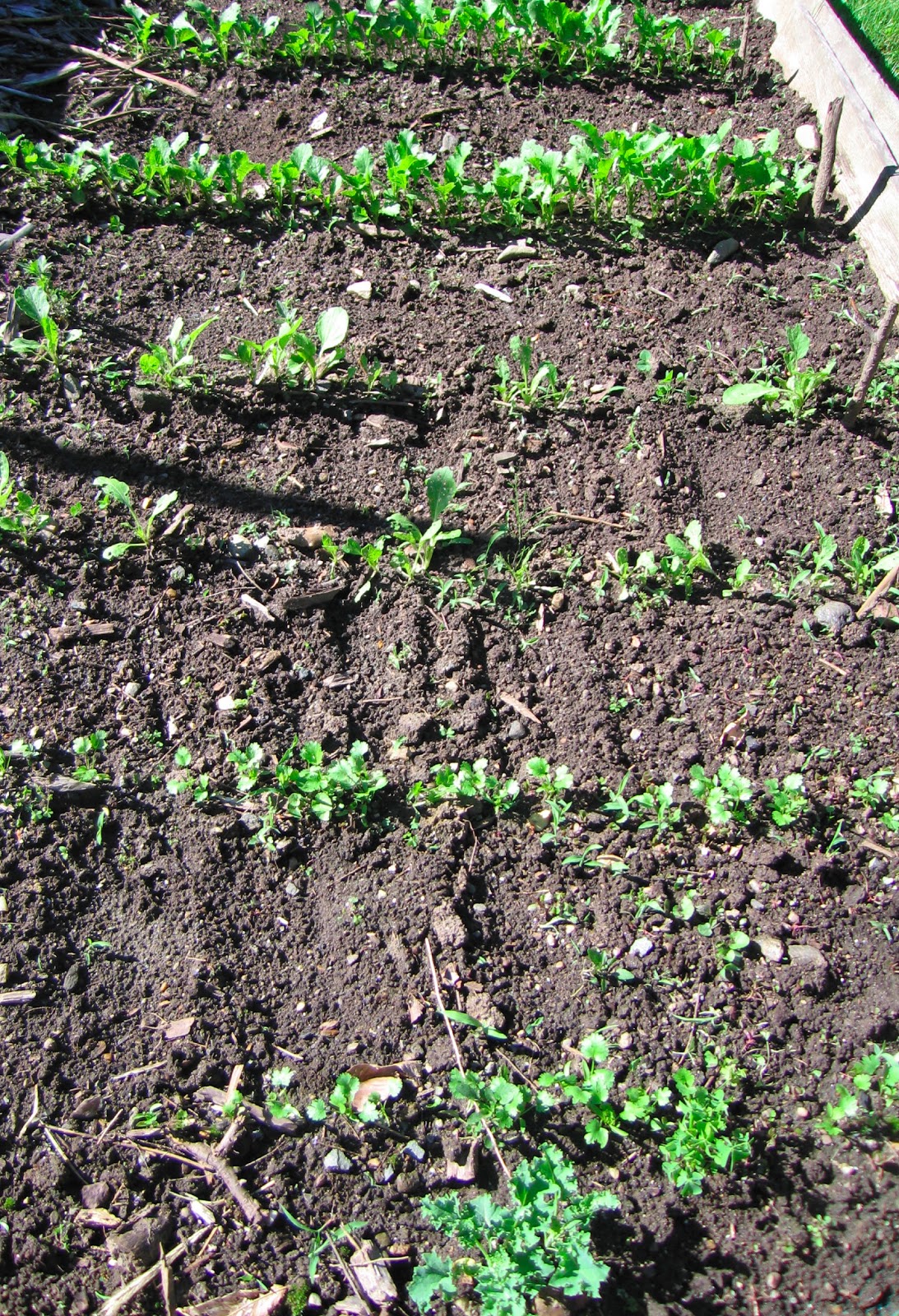
The weeds grow fast next to the seedlings that are just sprouting. Then there is the thinning that needs to get done so that the seedlings coming up do not crowd one another. Some vegetable beds still need to be made and planted with beans, carrots and beets at the community garden plot down the street. At home, I'm going to make a hay bale raised bed in which to plant the delicata and spaghetti squash so they can grow down the hill towards the woods, out of the way of our other garden beds. Radishes, potatoes, garlic, cilantro, arugula, lettuces, horseradish and spinach are up. Some basil and tomatoes are in. Today I'm going to a flower nursery to buy some annuals to put in pots and hanging baskets around the house. Soon I will be caught up, ahead of the weeds and enjoying watching the summer growing of all the plants, flowers and food on the land.

Photos of my garden taken this morning...


Monday, May 27, 2013

Feeling the Lovage: A traditional Romanian soup, Ciorba de perisoare


This week I spent a lot of time in the kitchen cooking with some of the goodies found in the garden this time of year.  So far the two main ingredients from the garden have been Rhubarb and Lovage. How many of you know about the herb, Lovage? If you have never cooked with this herb, it's time to start feeling the Lovage! Lovage is an amazing plant with a beautiful, fragrant odor and tangy, complex, out of this world flavor.

My husband Josh spent two years living in Romania when he served in the Peace Corps. While there he ate many sour soups, called Ciorba, which uses this herb to add an unmistakable flavor:  tangy, a bit sour and very flavorful. Ciorba de perisoare (meatballs), Ciorba de burta (tripe), Ciorba de cartofi (potato).... the list goes on.

Josh and I went to Romania and Hungary 10 years ago for our honeymoon. We had a wonderful trip and experience visiting and staying with some of the friends Josh made while in the Peace Corps. True hospitality met us during every interaction and with all the friends with whom we spent time. We traveled all around the country: Bucharest, Pitesti, Sighisoara, the Danube delta, Constanta (on the Black Sea coast), the mountains... As you can guess, I was struck by the culture and folk arts while in Romania. I especially admired the ornamental wood carved gates found in a certain region of Romania and the woven wool rugs were particularly striking, I loved looking at the rural dwellings especially. My friend Razvan remembers me taking a special interest in the folk arts on that trip. Perhaps some seeds were sown and embers were left smoldering...a foreshadowing of my interest in Eastern European traditions. I took the following photos during our trip in 2003. After this little photo tour you'll find a tasty recipe for Ciorba de perisoare if you would like to try and make it in your kitchen.

Bucharest, Romania: View from our friend's flat
Rural Mountain scene in Romania
Sighisoara, Romania
Village house, Romania
Flowers blooming, Romania
Constanta, Romania

I made Ciorba de perisoare on Friday and brought a little bit of Romania into our home for an evening spent with some friends. Oh, the smell of that soup! My house was filled with it's fragrance. We played all our favorite Romanian music which was bought on our trip many years ago. Kids and some adults danced around the living room table, what fun! If you can't travel to the place, bring it to you!

If you have some Lovage growing in your garden, can find some in a friend's garden or at a Farmer's Market perhaps you'd like to try this recipe. The soup was delicious. Even Kazmir, my 11 month old, got excited about eating it! Here is the link where I found the recipe:
Romanian Sour Meatball Soup

Ciorba de perisoare
Sour Meatball Soup Recipe (ciorba de perisoare)
Cooking time: 1 hour 30 minutes (preparation: 50 minutes; cooking: 30-40 minutes)

Makes: 8 servings

Ingredients:
  • 1 pound grounded meat (mixed beef and pork)
  • 1 pound beef (or veal) with bones
  • 2 small onions
  • 2 slices of bread
  • 2 tablespoons rice
  • salt
  • ground black pepper
  • 1 parsley root
  • 3-4 carrots
  • 1 parsnip root
  • 3-4 tablespoons tomato paste
  • 1 bunch of lovage leaves (or parsley leaves)
  • 2-3 tablespoons vinegar
Preparation: 
  1. Bring to boil  6 cups of water in a pot.
  2. Finely slice: 1 onion, the parsley, the parsnip and the carrots and put them in the water.  Add the beef (or veal) meat.
  3. In the mean time soak the bread in water then squeeze it. Mash the bread with a fork.
  4. Mix the ground meat with the other finely chopped onion, the mashed bread and the rice, and season with salt and ground black pepper. For a more tender meat composition add 2-3 tablespoons of water.
  5. Make small meat balls rolling them with wet hands.
  6. When the vegetables become tender put the meat balls in the boiling water. Reduce heat and simmer for 30-40 minutes.
  7. When the soup is almost done the meatballs are coming to the surface as the soup simmers.
  8. Add the tomato paste and stir.
  9. Finely chop the lovage and add it to the soup, and then season with salt and vinegar. If you do not have lovage, you can use fresh parsley leaves instead.
  10. The soup is delicious served with a bit of sour cream, and a hot pepper on the side.

Tuesday, May 21, 2013

A Call from the Ancestors: Roots, Family, the Land

My family's cottage in Korczyna, Poland

I'm working on a series of writings I am calling, A CALL FROM THE ANCESTORS.
With it I'll be addressing why I am inspired by the folk and peasant arts and traditions of Eastern Europe, especially Poland and Hungary. Why am I pulled to learn and experience more in relationship to my roots? Why does a place and a way of life inspire me so?

The following words came in a brainstorm as I think about this and begin writing.

- resonance
- longing
- roots
- family
- the land
- identity
- authenticity
- passion
- connection

RESONANCE: richness or significance especially in evoking an association or strong emotion

You know that feeling when something strikes you deep to the core? A feeling of recognition, attraction, intuition and knowing? There are moments in life when I've recognized this feeling.  I know when it happens and it is important for me to stop and pay attention. I do not know how this works exactly but I do have my thoughts on why it happens. Sometimes things add up and line up. Clear signs point you in a certain direction. I believe my ancestors have a hand in this, like they are beckoning to me, calling to me and I am following their lead.

LONGING: a yearning desire

My ancestor's blood runs through my veins. In my body there is genetic and a kind of energetic memory linking me back to the places where my people lived, loved, toiled and died. I am learning, teaching myself about the places and ways because so much was lost to me when my family became "American". It's a very common phenomenon isn't it? Immigrants come to the new world and and settle into new ways. They melt into the melting pot in order to work, raise families - survive. Yet our roots are left raw and exposed.  Some families work hard to stay connected to the old country, the heartland. And some families slowly assimilate to become more American. I long for a deeper connection with and understanding of the old ways.

My grandmother Stella left Poland for America in her early teens. She wrote letters to her family in Poland and even went back for a visit in the mid-80s. She spoke Polish but did not teach it to her children or grandchildren. She was always making and sharing Polish foods with the family: pierogi, golumbki, kielbasa, poppyseed roll. She tended her small garden and loved watching the flowers bloom.
My grandmom, Stella
My Hungarian great-grandfather George and my great-grandmom Angel were connected to their family in Hungary. George was born in America but went back to his ancestor's village to find his wife, Elizabeth. Much later he returned to visit his family a year or two before his death. When George and Elizabeth passed on there was no longer a strong connection between the families across the land and ocean.

No one is to blame. Times and circumstances change. I'm sure the politics of the time, WWII and then the cold war between capitalist America and communist Poland and Hungary, did not help to keep the ties strong for the next generations. However, one needs a place to grow, a place to settle and go deep, a place of understanding and connection with what came before. One needs to feel a connection with community, family, traditions, history, stories of their place and of their ancestors.

The writer, Wendell Berry writes about being a placed person. Perhaps the following words I found by Wallace Stegner can partly explain this feeling of longing I have. (This excerpt is taken from "The Sense of Place" by Wallace Stegner. Copyright 1992 by Wallace Stegner.)

"If you don’t know where you are, says Wendell Berry, you don’t know who you are. Berry is a writer, one of our best, who after some circling has settled on the bank of the Kentucky River, where he grew up and where his family has lived for many generations. He conducts his literary explorations inward, toward the core of what supports him physically and spiritually. He belongs to an honorable tradition, one that even in America includes some great names: Thoreau, Burroughs, Frost, Faulkner, Steinbeck – lovers of known earth, known weathers, and known neighbors both human and nonhuman. He calls himself a “placed” person."

"... if every American is several people, and one of them is or would like to be a placed person, another is the opposite, the displaced person, cousin not to Thoreau but to Daniel Boone, dreamer not of Walden Ponds but of far horizons, traveler not in Concord but in wild unsettled places, explorer not inward but outward. Adventurous, restless, seeking, asocial or antisocial, the displaced American persists by the million long after the frontier has vanished. He exists to some extent in all of us, the inevitable by-product of our history: the New World transient. "

"Back to Wendell Berry, and his belief that if you don’t know where you are you don’t know who you are. He is not talking about the kind of location that can be determined by looking at a map or a street sign. He is talking about the kind of knowing that involves the senses, the memory, the history of a family or a tribe. He is talking about the knowledge of place that comes from working in it in all weathers, making a living from it, suffering from its catastrophes, loving its mornings or evenings or hot noons, valuing it for the profound investment of labor and feeling that you, your parents and grandparents, your all-but-unknown ancestors have put into it. He is talking about the knowing that poets specialize in."

I long for this knowing and by following a path of longing and resonance I have begun to make connections to a deeper understanding of who I am and where I come from. My ancestors call to me on this journey. The quest simultaneously connects me to the heartlands of Poland and Hungary and roots me to my home in the hills of New England. As I move ahead and dig deep many things appear, unfold, resonate and become recognized. Connections are made. A path continues to unfold with every step I take.

ROOTS, FAMILY, THE LAND
My father's ancestors were Polish and Hungarian people of the land. They were from the small villages of Korczyna, Poland and Harskut Hungary. My great-grandfather Jan was born in the thatched roof, white washed cottage in Korczyna, Poland pictured above. My great-great grandmother and Cocia, Aniela and Aniela, are photographed wearing kierchiefs and aprons on their land in Korczyna.

My great-great grandmother Aniela surrounded by her daughters, my great grandmother and aunts in Poland
Ciocia Aniela, Korczyna, Poland
My dad can remembers his Babci Helena's gardens in Philadelphia, where she and Jan landed with their children, one of them being my grandmom Stella, after emigrating to America in the 1930s from Poland. Jan knew that true wealth was having land. So when he bought his small row home he bought the undeveloped lot next door. This lot became their orchard and garden. My dad helped with the garden chores and fondly remembers his grandmother's raspberry jam.

My great-grandfather Jan
My dad with Grandmom Angel Repas and Babci Helena
My dad went on to college then the Air Force to become an airline pilot. His work was in the sky. My parents are not avid gardeners. Some pretty flower beds are tended to and the lawn is always mowed. We did not raise or preserve our own food. The pulse of my heart moved me to pursue learning about and practicing gardening for the sake of beauty and food. I woke up to this fact in my early 20's after university when I spent a couple years working on a large fruit orchard in Solebury, PA. The desire to connect to the land and work it is running strong in my blood.

I used to wonder about my obsession with gardening? Where did it come from? One of the most satisfying things to me is working in the dirt with the plants, flowers, herbs, fruits and vegetables. A quiet day spent alone outside with the sounds of the wind and songbirds as my company is heaven. The making of beds, planting of seeds and removal of weeds marks the time passing. My feet connect to the earth, I breathe fresh air, feel the warm sun or the cool mists. While sitting in on a sociology class in Poland the professor lectured that peasants love the land more than anything. They have a very strong sense of territory. How can we not love that which sustains us? The peasants were completely and utterly tied to working the land and the land itself. Their work, traditions, symbols, stories, rituals, costume reflect this in a profound way. They were not separate. Life was not easy. There is a fundamental truth to living in balance with the seasons, the crops, the weather, the dirt.

Nowadays so much can get in the way of this truth. I like how the Polish author Wieslaw Mysliwski writes about our fundamental tie to the land in his book, "Stone Upon Stone":

"When death is staring you in the face even a college graduate becomes a person again, so does an engineer. At those times everything falls off life like leaves dropping from a tree in the fall, and you're left like a bare trunk.  At those times you're not drawn to the outside world but back to the land where you were born and grew up, because that's your only place on this earth. In that land, even a tomb is like a home for you."

Certain places resonate strongly with an individual. Do we remember things on a cellular level? Are ties and memories passed on from generation to generation through blood, DNA, spirit?  It's interesting to me that there is such a similarity in climate and landscape between Korczyna, Poland and Harskut, Hungary, the rural landscape around the Philadelphia area and even in Cummington, MA where I make my home. Rolling hills, green hay fields, wooded forests, distinct seasonal changes. I feel so at home in these places. They are familiar.

Outside of Harskut, Hungary

Village home and land in Harskut, Hungary

On the road between Krakow and Korczyna, Poland
Korczyna, Poland
I fell in love with the landscape around Krakow, Korczyna, and Harskut. The orchards there were full of plums, apples, cherries, walnuts, peaches, pears, elderberry. Most homes seemed to have a large garden with cabbage, potatoes, dill, currants, raspberries, blueberries, carrots, beets. At long last I met family and connected with them in such a meaningful way. They were wonderful hosts, so caring and hospitable, and happy to share with me their lives and lifestyles. My cousins Anna and Karol had their own large gardens at their homes in and outside of Korczyna.  They proudly showed me their garden plots and fed us the goodies growing there.

Anna in her garden harvesting potatoes for dinner

Karol with his garden outside of his parish house
Times have changed for my relatives in Poland and Hungary yet I can still see how their deep ties to the land manifest. Cousin Paulina gave me honey from her mother's hives. Her grandfather Roman shared homemade fruit wine with me in his home during an afternoon visit. In Hungary, my cousin Anci and her husband Laszlo have a large parcel of land a short drive from their home in another village near Harskut. Their parcel is full of wine grapes and fruit trees. Hungary is wine country. We spent a memorable evening on this land under a grape arbor with Laszlo playing the accordian and all of us singing and sharing songs. Tears were shed that night. The moment was so meaningful.

Me, Laszlo and Bencsi under the grape arbor

Hungarian wine grapes

Laszlo's vineyard and orchard
Roots, family and the land take on a deeply meaningful role. There is nothing like sitting around with one's family on a beautiful day, outdoors, enjoying company and literally the fruits of big gardens and hard work. Since connecting with my living family overseas and the land of Poland and Hungary, I begin to understand my family and myself more. My questions about who I am and where I come from are slowly answered. Still, I have so many questions and such yearning for further connection. This longing pushes me ahead and my ancestors pull me forward on a journey. I'm taking steps on a path where resonance unlocks the answers to many a mystery. 

I will explore these themes more in future posts where I'll write about identity, authenticity, passion and connection and how these ideas play out in my art practice on A Call from the Ancestors.

My Grandmom with my Grandmom Angel holding me as a baby in her arms


Tuesday, May 14, 2013

Spring: Breathing in New Life


This spring, as my gardens blossom and I plant seeds, I've been blessed with heartfelt reminders of the connections I have with meaningful people who touch my life. I am so held and for this I am thankful. A professor and friend from Poland answers questions I have about folk art traditions and culture in Poland and sends me beautiful Easter tokens from Krakow. A woman I look up to and befriended in Poland who is a professor and author surprises me with a gift of books on Polish topics of interest after I bought a book she wrote. My local town church sends a prayer shawl for Kaz and me, visitors, a home cooked meal and offers of child care after a car accident left me in pain and tired out emotionally and physically. My parents bring their love and some home cooked meals for our freezer when they come up for a visit. My mom buys me a beautiful book about Polish cooking, full of recipes I cannot wait to try. Family and friends call to check in and send their love. For all these things I am so thankful. Loving connections is what life is all about. Loving one another is what life is all about.

These generous connections have sustained me after a long winter, a time of huge personal transition into motherhood. I keep waiting to feel like I've caught up with myself. I keep waiting for my head to clear and breath free from under the waters of transition. As I wait for this moment I realize that things will never be the same again. Adding the role of mother to my identity has truly rocked my world.

At the same time I am hungry for inspiration, desiring a clear voice and purpose. I want to write about what inspires me, what fires up my creative soul, the work I do, the beauty that is out there in the world, what I am learning, the interests and quests that pull me like the moon pulls the tides.

I work with starts and stops. I've lost the ability to have open ended time and full days ahead to attend to my interests, goals, studies, art practice, music, blogging, gardening and other creative pursuits. In rare moments when I am alone with my thoughts I get hopeful and excited about the possibilities my dreams have to offer. I know they are there in background, following me around as I chase after a curious and crawling Kazmir. They whisper in my ear when I find myself with a quiet moment.

I go weeks listening to Polish language tapes most days and making progress. Then I go weeks without getting one lesson in. I'm reading books that deal with my interests. My local library finds me books I am anxious to read like Norman Davies, "Heart of Europe: A Short History of Poland"and "Stone Upon Stone" by Mysliwski. Then when I open a book at the end of the day I find I am able to read a few pages with an alert mind before I want to drift off to sleep. Progress is very slow going! My books become overdue. I lose momentum and get frustrated.

My art making is on hold for the moment. Imagined images pass through my head like ghosts I can't grasp. I imagine the texture of a wet paint brush full of bright color and spreading it across paper like one might imagine the sensation of sinking into a warm bath or taking a bite of a fresh out of the oven, butter soaked, homemade, bread. I fantasize about color combinations, patterns, big canvases and art shows.

It's time to breathe new life into this blog. I worry, can I do it? Can I focus? Can I keep a thread going? Can I discipline myself and write interesting pieces from the heart? I think I can. What if I set a goal to post once a week? I think that is reasonable. As I pursue my interests and look to study Polish and Hungarian culture and arts further, my blog can become the place of accountability to myself and to others who may find these topics and/or my method of pursuing my passions of interest. Spring reminds me that there is always another chance to begin afresh.


Monday, March 4, 2013

Late Winter: A season all it's own...


The quality of the light in late winter is distinct in my mind. I've felt for a long time that the end of February through early March seems like a season all it's own. It is not spring yet but it doesn't feel like winter anymore. The light is noticeably returning as I can see the time on the clock at 6am without having to turn the light on. The evenings are stretching out so that I see the western horizon line faintly aglow as I look out the window while nursing Kaz to sleep. I am a creature of light and love how the play of seasons and the time of day is forever changing the pallette in which I dwell.

Last Friday I found myself taking the long way home from an outing to the Clark Art Museum in Williamstown, MA. The mountains are just a little more dramatic over that way and I loved losing myself on the country roads, passing dairy farms and expansive vistas as I drove higher and higher in elevation. The whites of the snow also became shades of blue, gray and purple as the sky, light and shadows, played across open fields and forested mountainsides.


Another marker to this season, which is other than winter and spring, is the flowing of the sap within the trees. Things are stirring and coming back to life. A highlight of living here in New England is the marking of this time with Maple syrup making. It's been a couple years since we've tapped some of our Maple trees but today we put in six taps and hung from them the metal buckets to collect the sap. We don't make a big production out of this, just a little fun and work which gets us outside with the end result being a quart or two of syrup for morning pancakes and waffles. I look forward to checking the buckets everyday to see if they need emptying and putting a large stock pot full of the sap on the wood stove to eventually be boiled down to the sweet syrup. I find that getting out this time of year is special. The chirping of the chicadees have that beautiful springtime quality, the sun is higher in the sky and shines down a bit stronger.