Showing posts with label Gardens. Show all posts

Wednesday, April 2, 2014

Get Thee To A Garden!

Smith Botanical Conservatory

"Spring is here. If you are inclined to look for the meaning of life, get thee to a garden. There are profound reasons why the garden is central in the sacred texts of major religions. Since ancient times, it has been the place where the soul goes to exercise, while simultaneously engaged in a multilayered dance with earth, plants, sun, birds, bees, hummingbirds, butterflies, night, day, temperature, the faithful earthworm, water, minerals, fragrance, a cast of thousands of microorganisms, our stalwart friends the fungi, chlorophyll, nectar. I think of it as a ballet in the biosphere."
                                                            - George Ball in The Wall Street Journal

The temperatures are climbing to the 50's F here in the hills and although there is still snow on the muddy, muddy, ground, I feel as if I am finally thawing out from a long, hard winter. The above quote made my head spin in gladness for the beautiful perspective of the words which celebrate our interconnectedness with the plant, animal environmental, celestial systems. My gardens at home are just starting to reveal themselves again and I'm aching to connect with the dirt and the plants. Soon, soon...

We went to the Smith Botanical gardens a couple of weeks ago. Oh, the smells! Wonderful smells! Humid, damp air, moist dirt, hyacinth, freesia, daffodils, tulips, orange blossoms, camellia, cacao trees... It was soothing to our winter weary souls. And nice to have a view looking out the conservatory windows through green plants and steamed up windows to the gray frozen landscape.

So if you are still waiting for the grasses to green, the daffodils to push up, the forsythia to bloom, get thee to a garden! A botanical garden or conservatory is a good place to BE, even if just for an hour or two.  Your kids will love it, you will love it! You will linger in a room of blooming bulbs and close your eyes, just to breath in the fragrance. Happy Spring!

Kaz smelling the flowers

Bulb Show, Smith Conservatory

Camellia

Cacao Tree

Friday, October 4, 2013

Sister Sunflower


A sunflower grew to be twelve feet tall in my garden this year. She was a volunteer. I did not plant her. She is the daughter and granddaughter of the sunflowers that grew in the same spot over the past few years. I've come to think that her presence is the guardian of the house and the land. Everyone who comes to my house comments on her. I like her strong, quiet companionship. Sometimes I go out to the garden and just stand next to her. All alone. I look at her beauty and think about how she teaches me. In return I admire her and give her a little of my company. Her flower head is over a foot in diameter. The seeds are riping and later this fall they will feed the birds, squirrels and chipmunks who will come. Her head is heavy, bent down in a pose of humility and surrender. The dazzling yellow petals have whithered away. The nights have turned chilly. Her heart shaped leaves draw inward towards her strong and straight stalk holding her upright even in the rain and in the wind. She surrenders to the season. Fall is here and the trees, birds and flowers are letting us know. It has been a truly beautiful two weeks. I can't remember a more beautiful turning of the leaves to their golds, reds and coppers. Rain came today and everything is beautiful in a different kind of way.

In light of listening to a weekly poetry program on the radio, I feel like sharing another Mary Oliver poem. I just love her work. This excerpt from the following poem The Sunflowers resonates with me. Oliver just squeezes out the truth, the essence of a thing, the essence of spirit the truth about what it means to be alive.

Like these words from The Sunflower...

"...each of them, though it stands
in a crowd of many,
like a separate universe,

is lonely, the long work
of turning their lives
into a celebration
is not easy..."

The Sunflowers: APoem by Mary Oliver

Come with me
into the field of sunflowers.
Their faces are burnished disks,
their dry spines

creak like ship masts,
their green leaves,
so heavy and many,
fill all day with the sticky

sugars of the sun.
Come with me
to visit the sunflowers,
they are shy

but want to be friends;
they have wonderful stories
of when they were young -
the important weather,

the wandering crows.
Don't be afraid
to ask them questions!
Their bright faces,

which follow the sun,
will listen, and all
those rows of seeds -
each one a new life!

hope for a deeper acquaintance;
each of them, though it stands
in a crowd of many,
like a separate universe,

is lonely, the long work
of turning their lives
into a celebration
is not easy. Come

and let us talk with those modest faces,
the simple garments of leaves,
the coarse roots in the earth
so uprightly burning.

Tuesday, September 17, 2013

"My work is loving the world..." a poem by Mary Oliver


Messenger
By Mary Oliver
 
My work is loving the world.
Here the sunflowers, there the hummingbird—
equal seekers of sweetness.
Here the quickening yeast; there the blue plums.
Here the clam deep in the speckled sand.

Are my boots old? Is my coat torn?
Am I no longer young, and still half-perfect? Let me
keep my mind on what matters,
which is my work,

which is mostly standing still and learning to be
astonished.
The phoebe, the delphinium.
The sheep in the pasture, and the pasture.
Which is mostly rejoicing, since all the ingredients are here,

which is gratitude, to be given a mind and a heart
and these body-clothes,
a mouth with which to give shouts of joy
to the moth and the wren, to the sleepy dug-up clam,
telling them all, over and over, how it is
that we live forever.


All photos were taken today, a glorious September day, at the Raspberry Hill Community garden.

While on a drive this week I came across a radio show where poetry is read. The host read a Mary Oliver poem that took my breath away. I think her work is deeply beautiful and true.

Monday, August 5, 2013

Summer Harvest Time Begins

It's that special time in late summer when the hard work in the spring begins to really pay off. The counters and the table in my kitchen begin to be cluttered with what was picked from the gardens in the last day or so.

We've been having fun making cordials and fermenting various items from the great outdoors. Last week we spent an hour picking the wild cherries which are abundant this year on Stage Road. The cherries are sitting in various combinations of vodka, gin and sugar to become cordials to be enjoyed this fall and winter. I have a rose cordial in the makes. Once the elderberries are ripe they will be used to make our special immunity boosting cordial. I have a batch of pickles fermenting in a crock. It's my first time trying to make this fresh fermented pickle. I got the recipe out of my new Polish cook book, "From A Polish Country House Kitchen". Josh and a friend made a big batch of dandelion wine which is aging in corked bottles in the closet. I've been wanting a chest freezer for a long, long time and just recently we purchased a used one to put in the garage. It's holding a nice amount of rhubarb, raspberries and blueberries so far. I like to look in it and dream about the good food we'll be eating this winter.

OK, lets leave the kitchen, go outside and take a look in the gardens! Right out the front door is a scramble of marigolds, geraniums, lantana, snapdragons, new guinea impatiens, canna lillies, mint, and salvia in colorful pots on the front porch.

The old claw foot bathtub is now a garden and full of canna lilies, calla lilies, dahlias, geraniums, gladiolas and morning glory.

Today I picked a whooping 13 peaches off the peach tree. My biggest harvest yet!

I created a hay bale, raised bed at the base of the terrace garden hill in which to grow squash.  The plants are quite happy as they grow and spill out over the edge of the haybales onto the meadow and hillside. It looks like we'll be eating a lot of spaghetti and butter cup squash.

The sunflower greeting the morning rays is a pretty sight. Under her grows some kale, peppers and a volunteer tomatillo.

The cherry tomatoes are just beginning to ripen.

After looking around my garden at home I headed around the block to my community garden plot at the Raspberry Hill Community Garden. The space is a very special place where the sounds and beauty of the country nourish my soul. The crickets are chirping, the swallows fly and swoop over the garden and big old maple trees line the lane. The land, also known as the Guyette Farm, was gifted to the Franklin Land Trust by Evelyn Guyette. The gardens are situated on a beautiful spot overlooking hills to the west. The sunsets are gorgeous and the cloud watching is excellent. I got a late start with my plot this year. It's my first year working the land here and a lot of sod needed to be lifted in order to create my garden beds. Finally they are all planted and beginning to really thrive. I'm growing carrots, beets, dill, cabbage, potatoes, kale, onion, leeks, green beans, cucumbers and a cherry tomato. I really love being a part of this group of talented and dedicated gardeners and look forward to spending more time here with the land and with others in the years to come.

Let's walk through the gate and take a peak at the gardens.

The blueberries are ripening in the sun and the old barn is in view over the raspberry brambles.

Cloud watching to the west.

My plot is pictured below in the foreground. All the plants are relatively young but they are coming along. I think they'll do really well growing big and strong during the warm month of August into September before the frosts come.

At home again, Kaz came out to the garden with me after his morning nap.  He enjoys throwing around the dirt and mulch as I prep a bed to plant more lettuces.

Happy August, early harvest time to you! I hope you are enjoying these golden days.

Monday, June 3, 2013

Peasant Homes and Gardens

Peasant Cottage at Skansen Wygielzowie in Poland

Zakopane house and garden

Skansen window

Skansen garden

This post is a little collection of some inspiring pictures of peasant cottages and their gardens. I can't get over the simple use of color around the the windows and between the logs of the cottage in the first photo.  Turquoise and cobalt blue is one of my favorite color combinations.

All but the first photo here were taken by me two summers ago while I was in Poland. There are a number of lovely Skansens (outdoor and living history museums) in Poland that preserve folk, wooden architecture. Some towns are known for their existing homes exhibiting and/or preserving old architectural styles, Zakopane being one of them.

The old peasant homes breathe with life. A thatched roof, dirt floor and wooden walls, all organic and natural materials, allow the home to literally breathe. This makes me think of Hundertwasser and his manifesto where he proclaims that the space we inhabit, the architecture of our dwellings, is like another layer of skin. Our architecture is a layer outside our physical layer of skin surrounding our bodies and the layer of clothes we wear. Soon I will write more about old folk architecture, what I know and learned from my travels and reading.

For now...

There is a lot of work to do at home in my garden this time of year. I'm am feeling particularly busy, grounded and centered around the home with all that needs to get done. I haven't been able to sit at my computer to write much. But, gardening is an excellent activity for gathering one's thoughts! The writing will come.

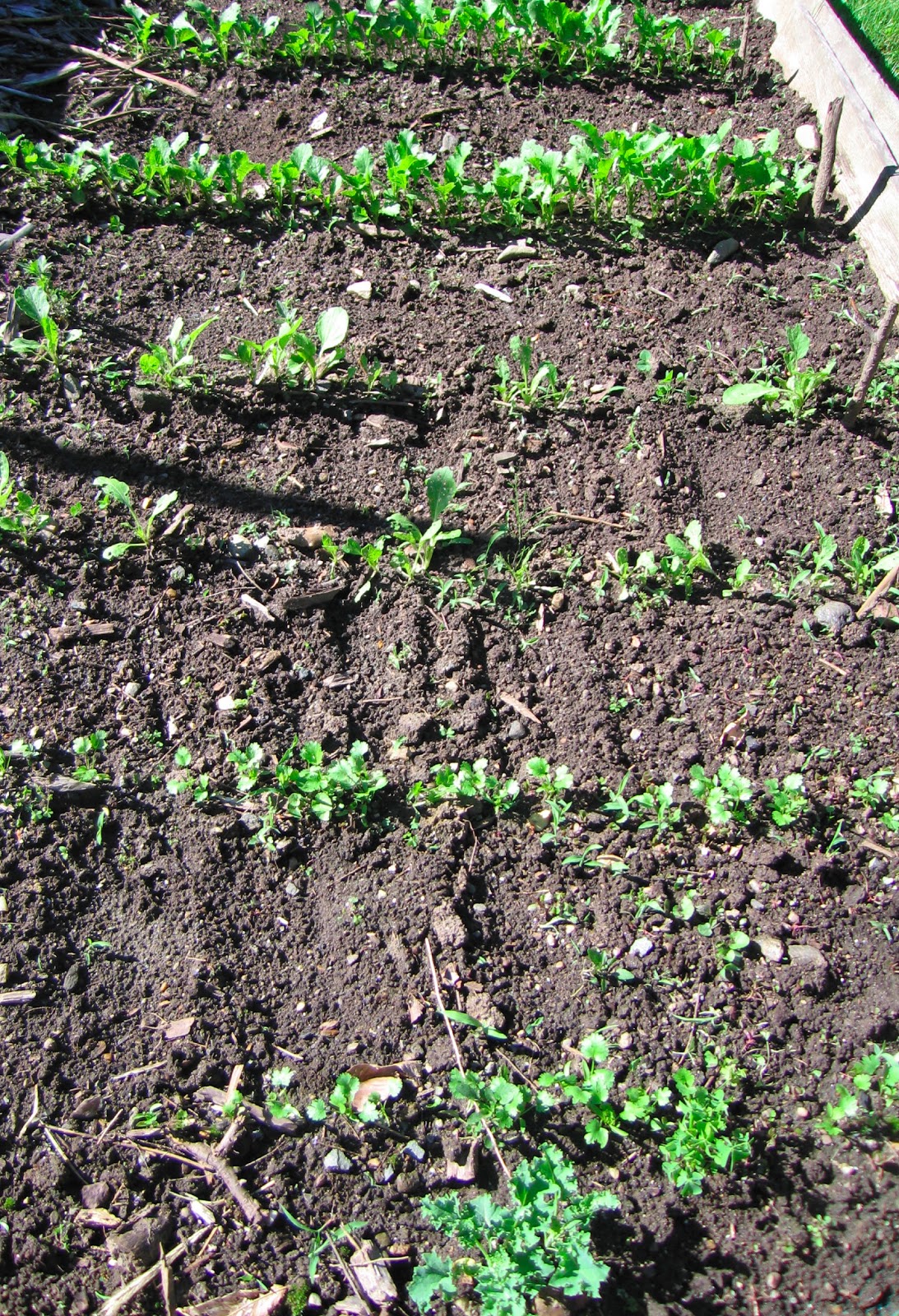
The weeds grow fast next to the seedlings that are just sprouting. Then there is the thinning that needs to get done so that the seedlings coming up do not crowd one another. Some vegetable beds still need to be made and planted with beans, carrots and beets at the community garden plot down the street. At home, I'm going to make a hay bale raised bed in which to plant the delicata and spaghetti squash so they can grow down the hill towards the woods, out of the way of our other garden beds. Radishes, potatoes, garlic, cilantro, arugula, lettuces, horseradish and spinach are up. Some basil and tomatoes are in. Today I'm going to a flower nursery to buy some annuals to put in pots and hanging baskets around the house. Soon I will be caught up, ahead of the weeds and enjoying watching the summer growing of all the plants, flowers and food on the land.

Photos of my garden taken this morning...


Monday, May 27, 2013

Feeling the Lovage: A traditional Romanian soup, Ciorba de perisoare


This week I spent a lot of time in the kitchen cooking with some of the goodies found in the garden this time of year.  So far the two main ingredients from the garden have been Rhubarb and Lovage. How many of you know about the herb, Lovage? If you have never cooked with this herb, it's time to start feeling the Lovage! Lovage is an amazing plant with a beautiful, fragrant odor and tangy, complex, out of this world flavor.

My husband Josh spent two years living in Romania when he served in the Peace Corps. While there he ate many sour soups, called Ciorba, which uses this herb to add an unmistakable flavor:  tangy, a bit sour and very flavorful. Ciorba de perisoare (meatballs), Ciorba de burta (tripe), Ciorba de cartofi (potato).... the list goes on.

Josh and I went to Romania and Hungary 10 years ago for our honeymoon. We had a wonderful trip and experience visiting and staying with some of the friends Josh made while in the Peace Corps. True hospitality met us during every interaction and with all the friends with whom we spent time. We traveled all around the country: Bucharest, Pitesti, Sighisoara, the Danube delta, Constanta (on the Black Sea coast), the mountains... As you can guess, I was struck by the culture and folk arts while in Romania. I especially admired the ornamental wood carved gates found in a certain region of Romania and the woven wool rugs were particularly striking, I loved looking at the rural dwellings especially. My friend Razvan remembers me taking a special interest in the folk arts on that trip. Perhaps some seeds were sown and embers were left smoldering...a foreshadowing of my interest in Eastern European traditions. I took the following photos during our trip in 2003. After this little photo tour you'll find a tasty recipe for Ciorba de perisoare if you would like to try and make it in your kitchen.

Bucharest, Romania: View from our friend's flat
Rural Mountain scene in Romania
Sighisoara, Romania
Village house, Romania
Flowers blooming, Romania
Constanta, Romania

I made Ciorba de perisoare on Friday and brought a little bit of Romania into our home for an evening spent with some friends. Oh, the smell of that soup! My house was filled with it's fragrance. We played all our favorite Romanian music which was bought on our trip many years ago. Kids and some adults danced around the living room table, what fun! If you can't travel to the place, bring it to you!

If you have some Lovage growing in your garden, can find some in a friend's garden or at a Farmer's Market perhaps you'd like to try this recipe. The soup was delicious. Even Kazmir, my 11 month old, got excited about eating it! Here is the link where I found the recipe:
Romanian Sour Meatball Soup

Ciorba de perisoare
Sour Meatball Soup Recipe (ciorba de perisoare)
Cooking time: 1 hour 30 minutes (preparation: 50 minutes; cooking: 30-40 minutes)

Makes: 8 servings

Ingredients:
  • 1 pound grounded meat (mixed beef and pork)
  • 1 pound beef (or veal) with bones
  • 2 small onions
  • 2 slices of bread
  • 2 tablespoons rice
  • salt
  • ground black pepper
  • 1 parsley root
  • 3-4 carrots
  • 1 parsnip root
  • 3-4 tablespoons tomato paste
  • 1 bunch of lovage leaves (or parsley leaves)
  • 2-3 tablespoons vinegar
Preparation: 
  1. Bring to boil  6 cups of water in a pot.
  2. Finely slice: 1 onion, the parsley, the parsnip and the carrots and put them in the water.  Add the beef (or veal) meat.
  3. In the mean time soak the bread in water then squeeze it. Mash the bread with a fork.
  4. Mix the ground meat with the other finely chopped onion, the mashed bread and the rice, and season with salt and ground black pepper. For a more tender meat composition add 2-3 tablespoons of water.
  5. Make small meat balls rolling them with wet hands.
  6. When the vegetables become tender put the meat balls in the boiling water. Reduce heat and simmer for 30-40 minutes.
  7. When the soup is almost done the meatballs are coming to the surface as the soup simmers.
  8. Add the tomato paste and stir.
  9. Finely chop the lovage and add it to the soup, and then season with salt and vinegar. If you do not have lovage, you can use fresh parsley leaves instead.
  10. The soup is delicious served with a bit of sour cream, and a hot pepper on the side.

Tuesday, May 21, 2013

A Call from the Ancestors: Roots, Family, the Land

My family's cottage in Korczyna, Poland

I'm working on a series of writings I am calling, A CALL FROM THE ANCESTORS.
With it I'll be addressing why I am inspired by the folk and peasant arts and traditions of Eastern Europe, especially Poland and Hungary. Why am I pulled to learn and experience more in relationship to my roots? Why does a place and a way of life inspire me so?

The following words came in a brainstorm as I think about this and begin writing.

- resonance
- longing
- roots
- family
- the land
- identity
- authenticity
- passion
- connection

RESONANCE: richness or significance especially in evoking an association or strong emotion

You know that feeling when something strikes you deep to the core? A feeling of recognition, attraction, intuition and knowing? There are moments in life when I've recognized this feeling.  I know when it happens and it is important for me to stop and pay attention. I do not know how this works exactly but I do have my thoughts on why it happens. Sometimes things add up and line up. Clear signs point you in a certain direction. I believe my ancestors have a hand in this, like they are beckoning to me, calling to me and I am following their lead.

LONGING: a yearning desire

My ancestor's blood runs through my veins. In my body there is genetic and a kind of energetic memory linking me back to the places where my people lived, loved, toiled and died. I am learning, teaching myself about the places and ways because so much was lost to me when my family became "American". It's a very common phenomenon isn't it? Immigrants come to the new world and and settle into new ways. They melt into the melting pot in order to work, raise families - survive. Yet our roots are left raw and exposed.  Some families work hard to stay connected to the old country, the heartland. And some families slowly assimilate to become more American. I long for a deeper connection with and understanding of the old ways.

My grandmother Stella left Poland for America in her early teens. She wrote letters to her family in Poland and even went back for a visit in the mid-80s. She spoke Polish but did not teach it to her children or grandchildren. She was always making and sharing Polish foods with the family: pierogi, golumbki, kielbasa, poppyseed roll. She tended her small garden and loved watching the flowers bloom.
My grandmom, Stella
My Hungarian great-grandfather George and my great-grandmom Angel were connected to their family in Hungary. George was born in America but went back to his ancestor's village to find his wife, Elizabeth. Much later he returned to visit his family a year or two before his death. When George and Elizabeth passed on there was no longer a strong connection between the families across the land and ocean.

No one is to blame. Times and circumstances change. I'm sure the politics of the time, WWII and then the cold war between capitalist America and communist Poland and Hungary, did not help to keep the ties strong for the next generations. However, one needs a place to grow, a place to settle and go deep, a place of understanding and connection with what came before. One needs to feel a connection with community, family, traditions, history, stories of their place and of their ancestors.

The writer, Wendell Berry writes about being a placed person. Perhaps the following words I found by Wallace Stegner can partly explain this feeling of longing I have. (This excerpt is taken from "The Sense of Place" by Wallace Stegner. Copyright 1992 by Wallace Stegner.)

"If you don’t know where you are, says Wendell Berry, you don’t know who you are. Berry is a writer, one of our best, who after some circling has settled on the bank of the Kentucky River, where he grew up and where his family has lived for many generations. He conducts his literary explorations inward, toward the core of what supports him physically and spiritually. He belongs to an honorable tradition, one that even in America includes some great names: Thoreau, Burroughs, Frost, Faulkner, Steinbeck – lovers of known earth, known weathers, and known neighbors both human and nonhuman. He calls himself a “placed” person."

"... if every American is several people, and one of them is or would like to be a placed person, another is the opposite, the displaced person, cousin not to Thoreau but to Daniel Boone, dreamer not of Walden Ponds but of far horizons, traveler not in Concord but in wild unsettled places, explorer not inward but outward. Adventurous, restless, seeking, asocial or antisocial, the displaced American persists by the million long after the frontier has vanished. He exists to some extent in all of us, the inevitable by-product of our history: the New World transient. "

"Back to Wendell Berry, and his belief that if you don’t know where you are you don’t know who you are. He is not talking about the kind of location that can be determined by looking at a map or a street sign. He is talking about the kind of knowing that involves the senses, the memory, the history of a family or a tribe. He is talking about the knowledge of place that comes from working in it in all weathers, making a living from it, suffering from its catastrophes, loving its mornings or evenings or hot noons, valuing it for the profound investment of labor and feeling that you, your parents and grandparents, your all-but-unknown ancestors have put into it. He is talking about the knowing that poets specialize in."

I long for this knowing and by following a path of longing and resonance I have begun to make connections to a deeper understanding of who I am and where I come from. My ancestors call to me on this journey. The quest simultaneously connects me to the heartlands of Poland and Hungary and roots me to my home in the hills of New England. As I move ahead and dig deep many things appear, unfold, resonate and become recognized. Connections are made. A path continues to unfold with every step I take.

ROOTS, FAMILY, THE LAND
My father's ancestors were Polish and Hungarian people of the land. They were from the small villages of Korczyna, Poland and Harskut Hungary. My great-grandfather Jan was born in the thatched roof, white washed cottage in Korczyna, Poland pictured above. My great-great grandmother and Cocia, Aniela and Aniela, are photographed wearing kierchiefs and aprons on their land in Korczyna.

My great-great grandmother Aniela surrounded by her daughters, my great grandmother and aunts in Poland
Ciocia Aniela, Korczyna, Poland
My dad can remembers his Babci Helena's gardens in Philadelphia, where she and Jan landed with their children, one of them being my grandmom Stella, after emigrating to America in the 1930s from Poland. Jan knew that true wealth was having land. So when he bought his small row home he bought the undeveloped lot next door. This lot became their orchard and garden. My dad helped with the garden chores and fondly remembers his grandmother's raspberry jam.

My great-grandfather Jan
My dad with Grandmom Angel Repas and Babci Helena
My dad went on to college then the Air Force to become an airline pilot. His work was in the sky. My parents are not avid gardeners. Some pretty flower beds are tended to and the lawn is always mowed. We did not raise or preserve our own food. The pulse of my heart moved me to pursue learning about and practicing gardening for the sake of beauty and food. I woke up to this fact in my early 20's after university when I spent a couple years working on a large fruit orchard in Solebury, PA. The desire to connect to the land and work it is running strong in my blood.

I used to wonder about my obsession with gardening? Where did it come from? One of the most satisfying things to me is working in the dirt with the plants, flowers, herbs, fruits and vegetables. A quiet day spent alone outside with the sounds of the wind and songbirds as my company is heaven. The making of beds, planting of seeds and removal of weeds marks the time passing. My feet connect to the earth, I breathe fresh air, feel the warm sun or the cool mists. While sitting in on a sociology class in Poland the professor lectured that peasants love the land more than anything. They have a very strong sense of territory. How can we not love that which sustains us? The peasants were completely and utterly tied to working the land and the land itself. Their work, traditions, symbols, stories, rituals, costume reflect this in a profound way. They were not separate. Life was not easy. There is a fundamental truth to living in balance with the seasons, the crops, the weather, the dirt.

Nowadays so much can get in the way of this truth. I like how the Polish author Wieslaw Mysliwski writes about our fundamental tie to the land in his book, "Stone Upon Stone":

"When death is staring you in the face even a college graduate becomes a person again, so does an engineer. At those times everything falls off life like leaves dropping from a tree in the fall, and you're left like a bare trunk.  At those times you're not drawn to the outside world but back to the land where you were born and grew up, because that's your only place on this earth. In that land, even a tomb is like a home for you."

Certain places resonate strongly with an individual. Do we remember things on a cellular level? Are ties and memories passed on from generation to generation through blood, DNA, spirit?  It's interesting to me that there is such a similarity in climate and landscape between Korczyna, Poland and Harskut, Hungary, the rural landscape around the Philadelphia area and even in Cummington, MA where I make my home. Rolling hills, green hay fields, wooded forests, distinct seasonal changes. I feel so at home in these places. They are familiar.

Outside of Harskut, Hungary

Village home and land in Harskut, Hungary

On the road between Krakow and Korczyna, Poland
Korczyna, Poland
I fell in love with the landscape around Krakow, Korczyna, and Harskut. The orchards there were full of plums, apples, cherries, walnuts, peaches, pears, elderberry. Most homes seemed to have a large garden with cabbage, potatoes, dill, currants, raspberries, blueberries, carrots, beets. At long last I met family and connected with them in such a meaningful way. They were wonderful hosts, so caring and hospitable, and happy to share with me their lives and lifestyles. My cousins Anna and Karol had their own large gardens at their homes in and outside of Korczyna.  They proudly showed me their garden plots and fed us the goodies growing there.

Anna in her garden harvesting potatoes for dinner

Karol with his garden outside of his parish house
Times have changed for my relatives in Poland and Hungary yet I can still see how their deep ties to the land manifest. Cousin Paulina gave me honey from her mother's hives. Her grandfather Roman shared homemade fruit wine with me in his home during an afternoon visit. In Hungary, my cousin Anci and her husband Laszlo have a large parcel of land a short drive from their home in another village near Harskut. Their parcel is full of wine grapes and fruit trees. Hungary is wine country. We spent a memorable evening on this land under a grape arbor with Laszlo playing the accordian and all of us singing and sharing songs. Tears were shed that night. The moment was so meaningful.

Me, Laszlo and Bencsi under the grape arbor

Hungarian wine grapes

Laszlo's vineyard and orchard
Roots, family and the land take on a deeply meaningful role. There is nothing like sitting around with one's family on a beautiful day, outdoors, enjoying company and literally the fruits of big gardens and hard work. Since connecting with my living family overseas and the land of Poland and Hungary, I begin to understand my family and myself more. My questions about who I am and where I come from are slowly answered. Still, I have so many questions and such yearning for further connection. This longing pushes me ahead and my ancestors pull me forward on a journey. I'm taking steps on a path where resonance unlocks the answers to many a mystery. 

I will explore these themes more in future posts where I'll write about identity, authenticity, passion and connection and how these ideas play out in my art practice on A Call from the Ancestors.

My Grandmom with my Grandmom Angel holding me as a baby in her arms