Showing posts with label Zakopane. Show all posts

Thursday, September 5, 2013

My new love... Embroidery!


I discovered something new about myself this week. I love to do embroidery. I had a hunch that I would really like to do this and I was right. I've enjoyed admiring and looking closely at embroidery for a long time. Now it feels so good to be doing it!

Last Saturday I took a two hour workshop on embroidery at a new, truly awesome, re-use center/store called KNACK in Easthampton at the Eastworks building. Knack is a DIY palace. The store takes used things, sometimes on the way to being discarded, and brings new life to these things as potential and transformed arts and crafts items. I love the idea behind creating a store like this. Upcycling and reusing materials is a great way to transform items and the workshop space encourages community to learn to do things for themselves.  Here is Knack's mission statement...

Knack: The Art of Clever Reuse is a creative reuse center where you can:
  • Find all sorts of reusable materials for your creative projects
  • Take a workshop or drop in during our open studio time
  • Have a party (birthday, craft night, creative gathering, etc.)
  • Shop for upcycled gifts/art handmade by local artists
A woman named Bonnie Sennott taught the workshop. I was really impressed with her embroidered art pieces. She creates abstract images with embroidery stitches which I found beautiful and inspiring. She has a blog, Blue Peninsula Knits, which is full of her projects and examples of her many creative talents. She is a talented knitter as well as a knit pattern creator.

The photo above is of my completed project from the workshop. Bonnie gave us a template to work with and all of the materials to create a sachet. We got to try out 6 different embroidery stitches while creating this pretty, fragrant sachet, stuffed with lavender, camomile and flax seeds.

I find that doing needle work is really very relaxing to me...like weeding a garden or knitting a scarf. Repetitive, task oriented work makes me happy and puts me in a mentally and physically relaxed state. This activity is becoming a nice way to end a busy day full of child care and play, work, household chores, gardening and cooking. Plus I feel like I'm making progress with my creative practice since the sewing links up with the creative work I am now doing. It's a win/win situation!

At home, before taking this workshop, I've been playing around with simple watercolor patterns and incorporating hand stitched elements into them. I've been really attracted to the sun symbol motifs carved into wood of decorative Zakopane architectural elements and furniture in Poland. I'm making little images with gouache, paper, and thread using simple folk art motifs. Here's a work in progress at my work table.
I'll be happily embroidering as well as making new paper cuts and little paintings to prepare for the full season of craft fairs and holiday events in the coming months. I'll post more news on these events in a future blog post.

Monday, July 29, 2013

Stone Upon Stone


I just finished reading "Stone Upon Stone" by Wieslaw Mysliwski, translated from Polish by Bill Johnston. This book was chosen by the University of Rochester as "the finest example of world literature in translation" for the year of 2012.

 I found out about this book a few months ago online by a great resource for those of us interested in Polish culture: The Cosmopolitan Review, "A Transatlantic Review of Things Polish, in English".

"Stone Upon Stone" is a raw, honest and human piece of fiction narrated by the protagonist, Szymek Pietruszka. The memories from his life are sometimes brutal, other times funny, lovingly tender and often painful. His recollections are sometimes poetic and poignant and other times long winded and rambling.

The book is set in communist era Poland in the mid to late 20th century. The story weaves back and forth as Szymek sets forth a stream of consciousness recalling memories from his childhood, young adulthood, time fighting in World War II, and adulthood as he looks back from the perspective of the winter of his life. His memories come to the surface as he prepares to build a tomb in which to be buried. So many rich stories and perspectives roll from page to page. I felt like I was a part of Szymek's mental wanderings and intimately witnessed his 20th century life, lived as a peasant in a small village, where he lived so much and saw so much change.

Szymek is the real deal. He's doesn't lead a pretty life. His stories certainly are not sugar coated. He suffered much and his neighbors suffered along side him. Yet you see a resilience and a strength of character through his humanity and humor.  At times I cringed while I read about his behavior and actions as he deals with strong emotions related to love: the love of a woman and the love for his invalid brother. Szymek lets the reader in to witness both his dark side and light side. My heart ripped open as I read his first hand account about fighting in World War II and what kind of atrocities he witnessed during that time. He's a man who grows up with all aspects of raw reality coming to him. It's one event after another: abuse, war, hunger, hard work and hard drinking, love gained and lost.  I wonder if his story mirrors the story of Poland? Poland greatly suffered during the time of Symek's life.

What I most enjoyed about "Stone Upon Stone" is how Szymek remembers the traditions of his family and of the rural peasants in the village in which he lives. He is down to earth, often blunt, as he recalls his memories of working the land, and the traditions and rituals around the holidays. Nothing about this story is veiled with nostalgic memories that shine as if looked through rose colored lenses. Szymek tells things as they were. He remembers hard work mowing the field at harvest...

"Plus harvesttime was getting close. And harvesttime was a curse. From dawn till night you worked like and animal. Your head's pounding from the mowing, your eyes are blinded by sweat. Instead of crossing the sky, the sun just keeps moving to a fro across your back, all the time from when it rises in the east till when it sets in the west. It's like its claws were sunk into your skin. Because it's not even the sun, the sun is what shines over the river and the meadow and the reeds, this thing is a huge bright bird that's got it in for you. The moment you feel like straightening up a bit, it jabs you in the back of the head with its beak. Like it was reminding you your life belongs down below, not up above, that your life is this eternal unmown field you keep moving across, swinging your scythe. And you don't even know if you'll ever finish mowing it. You'll only be done when death takes you."

Field near Korczyna, Poland

Farmer's fields near Zakopane, Poland
 I recommend reading this book if you are interested in Polish literature, history, life and culture. The story is told in the most personal of ways through a character who is not afraid to tell a story about the realities of his life and the experinces of his heart.


Monday, June 3, 2013

Peasant Homes and Gardens

Peasant Cottage at Skansen Wygielzowie in Poland

Zakopane house and garden

Skansen window

Skansen garden

This post is a little collection of some inspiring pictures of peasant cottages and their gardens. I can't get over the simple use of color around the the windows and between the logs of the cottage in the first photo.  Turquoise and cobalt blue is one of my favorite color combinations.

All but the first photo here were taken by me two summers ago while I was in Poland. There are a number of lovely Skansens (outdoor and living history museums) in Poland that preserve folk, wooden architecture. Some towns are known for their existing homes exhibiting and/or preserving old architectural styles, Zakopane being one of them.

The old peasant homes breathe with life. A thatched roof, dirt floor and wooden walls, all organic and natural materials, allow the home to literally breathe. This makes me think of Hundertwasser and his manifesto where he proclaims that the space we inhabit, the architecture of our dwellings, is like another layer of skin. Our architecture is a layer outside our physical layer of skin surrounding our bodies and the layer of clothes we wear. Soon I will write more about old folk architecture, what I know and learned from my travels and reading.

For now...

There is a lot of work to do at home in my garden this time of year. I'm am feeling particularly busy, grounded and centered around the home with all that needs to get done. I haven't been able to sit at my computer to write much. But, gardening is an excellent activity for gathering one's thoughts! The writing will come.

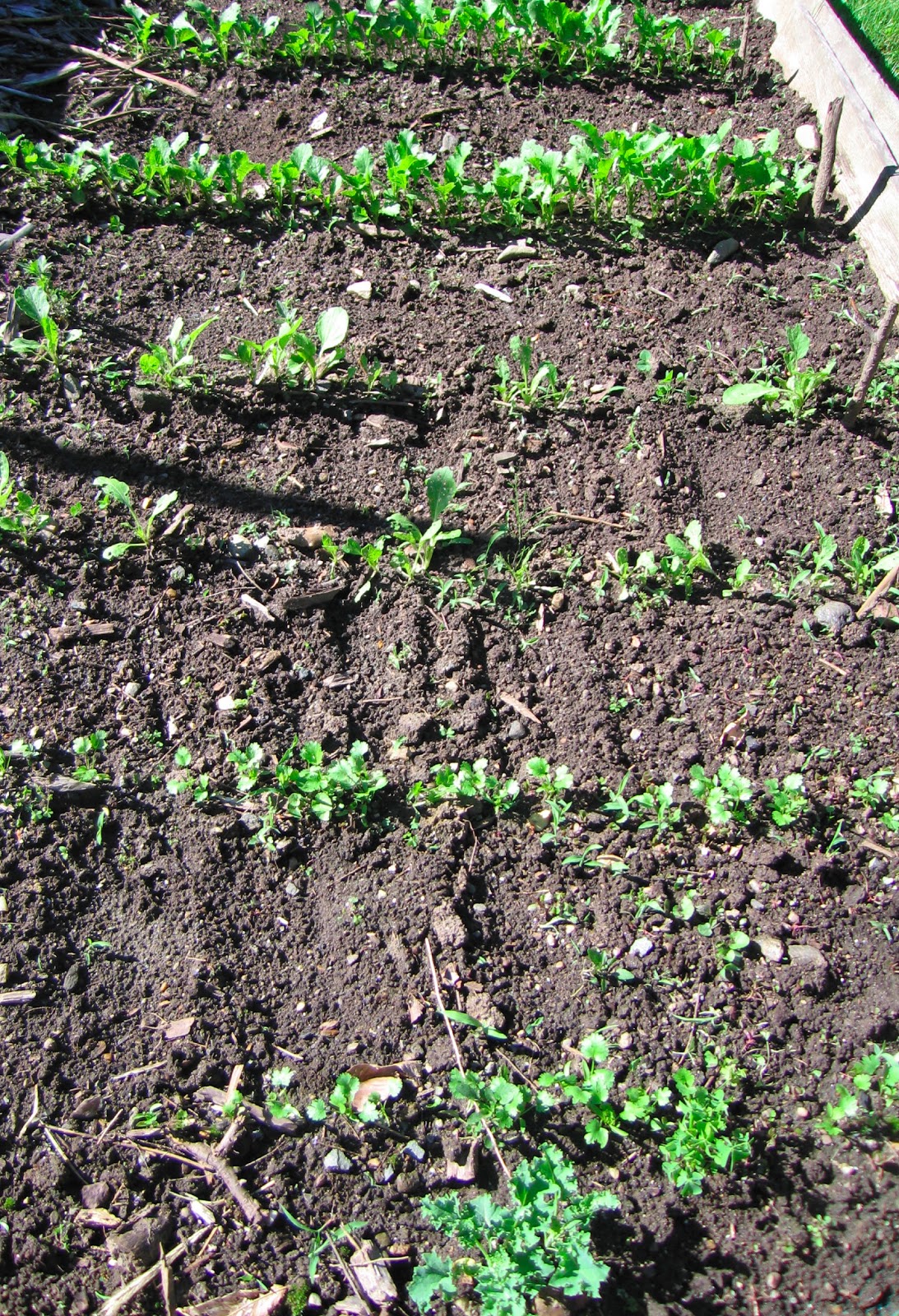
The weeds grow fast next to the seedlings that are just sprouting. Then there is the thinning that needs to get done so that the seedlings coming up do not crowd one another. Some vegetable beds still need to be made and planted with beans, carrots and beets at the community garden plot down the street. At home, I'm going to make a hay bale raised bed in which to plant the delicata and spaghetti squash so they can grow down the hill towards the woods, out of the way of our other garden beds. Radishes, potatoes, garlic, cilantro, arugula, lettuces, horseradish and spinach are up. Some basil and tomatoes are in. Today I'm going to a flower nursery to buy some annuals to put in pots and hanging baskets around the house. Soon I will be caught up, ahead of the weeds and enjoying watching the summer growing of all the plants, flowers and food on the land.

Photos of my garden taken this morning...


Monday, July 18, 2011

Zakopane

This past Saturday I took a bus out of Krakow to the Tatra Mountains. They are the highest mountains in Central Europe. I went to a town called Zakopane which is a tourist haven especially for skiers in the winter months. There is a rich collection of museums and houses that show off the Zakopane Style of wood cutting/carving and architectural design and decoration with wood. This decorative style, the motifs represented in the museums and throughout the town, had me captivated. The beautiful hand carved decorative touches add an extra level of personality and warmth to already beautiful buildings. I was struck by the use of positive and negative space in the designs and how the light played in and around the designs within the buildings. I went in for a lot of close up photos but I also couldn't help but take exterior photos so that you can get a sense of what the overall buildings looks like. There are garden photos too so that you can see how the flowers and plants outside some of the homes look while mingling with the lines and dimensions found in the fine wood designs. I went to the Villa Koliba Museum, which was a highlight for me. It was created in the Zakopane Style by artist, Stanislawa Witkiewicza.  I also went to a renovated traditional Tatra highlander house which houses the collection of Marii i Bronislawa Dembowskich. Their collection was the source of inspiration for Witkiewicza from which the idea of pure Polish style in architecture called Zakopane Style was born. Please enjoy...


All the above photographs were taken in this house, Stanislawa Witkiewicza, Zakopane Style Museum, The Villa Koliba Museum.


 Above are a collection of shots I took while walking around the town looking at the interesting sights.


The last three photographs were taken at the traditional Tatra Highlander House which houses the collection of Marii i Bronislawa Dembowskich.